 ESP
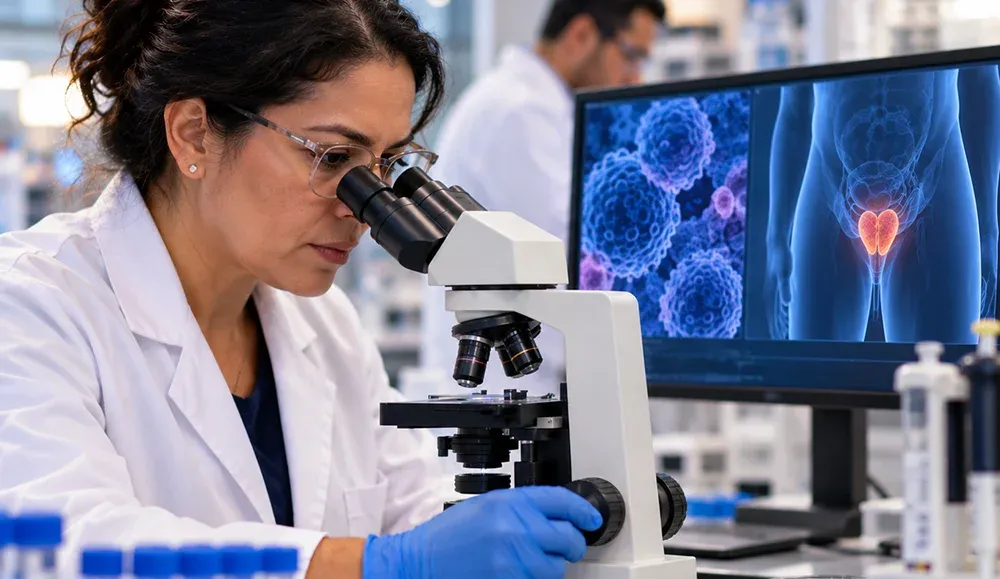
ESPAn international team of researchers has identified a new weakness in prostate cancer cells that could lead to more effective treatments for one of the most common cancers among men.
The study, published in the Proceedings of the National Academy of Sciences (PNAS), was led by scientists from Flinders University in Australia and South China University of Technology. Their findings highlight two enzymes, PDIA1 and PDIA5, that play a key role in helping prostate cancer cells grow, survive, and resist existing treatments.
According to the researchers, PDIA1 and PDIA5 act like molecular bodyguards for the androgen receptor (AR), a protein that drives prostate cancer growth. When these enzymes are blocked, the AR loses stability and breaks apart, causing cancer cells to die and tumors to shrink in both lab cultures and animal models.
Know more: https://www.sciencedaily.com/releases/2025/11/251110021056.htm
IMAGE: © <a href='https://www.123rf.com/profile_virtosmedia'>virtosmedia</a>, <a href='https://www.123rf.com/free-images/'>123RF Free Images</a>